
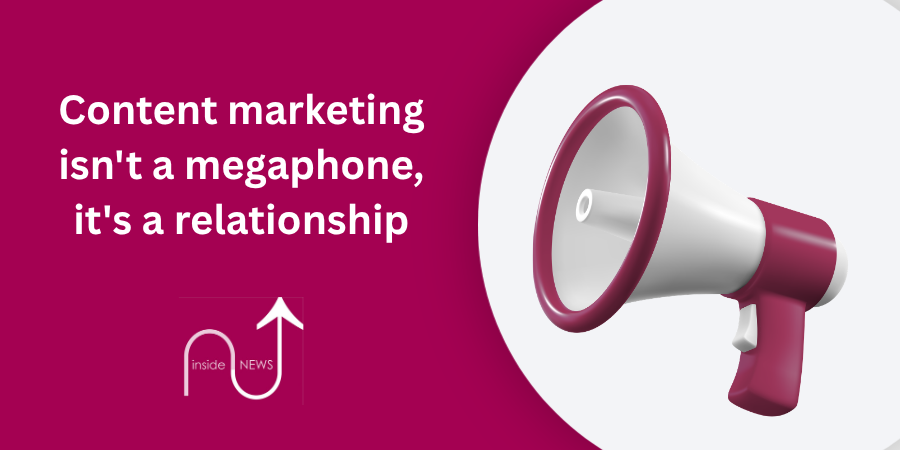
I once worked with a client who wanted every blog article and social media post to end with ‘buy now’. Every. Single. One. I explained that if I asked you to marry me on a first date, you’d run a mile — and yet that’s exactly what a lot of businesses do with content marketing.
Content marketing is not advertising in disguise. It’s the slow, unglamorous work of showing up, being useful, and letting people get to know you before you ever ask them for anything. Think of it as the world’s longest first date, except you’re allowed to bring biscuits (and I do bring biscuits to some of my clients!)
The problem with impatience
Most businesses give up on content marketing after about six weeks, because six weeks in, nobody’s beating down the door. That’s not failure – that’s just how trust works. You don’t trust a stranger after two conversations, and neither does your audience. They need to see you turn up, consistently, sharing value and saying useful things, before they’ll believe you’re worth their attention (let alone their money).
The businesses that do well at this are the ones who treat content like a long game rather than a lever they can pull for instant results. They write the guide that actually answers the question, rather than teasing it and hiding the answer behind a form. They share the thing that makes them look human, not just professional. Over time, that adds up to something advertising can’t buy: familiarity, and eventually, trust.
What good content marketing actually does
It answers questions before your prospects even ask a salesperson. It demonstrates expertise without shouting “we’re experts!” (nobody believes that one anyway). And it gives people a reason to come back – which is the entire point, because most buying decisions don’t happen on the first visit.
None of this means content marketing shouldn’t work commercially. It absolutely should. But the commercial bit is the outcome of trust well-earned, not the opening line.
TIP: Get the habit of asking new enquiries where they’ve heard about you.
Where people go wrong
They confuse volume with strategy. Churning out content for the sake of a content calendar, with no clear idea of who it’s for or what it should make someone feel, is just noise with better formatting. Before you write anything, it’s worth asking: who is this actually for, and what do I want them to think, feel, or do next?
If you can answer that in a sentence, you’re already ahead of most of the internet.
So next time you’re tempted to end a blog post with ‘buy now’ – don’t. Say something useful instead. The buying bit will follow, eventually, on its own terms. It always does.
